Houseplants SVG Graphics & Illustrations Set
First Impression: Warm, Lived-In, and Instantly Trustworthy
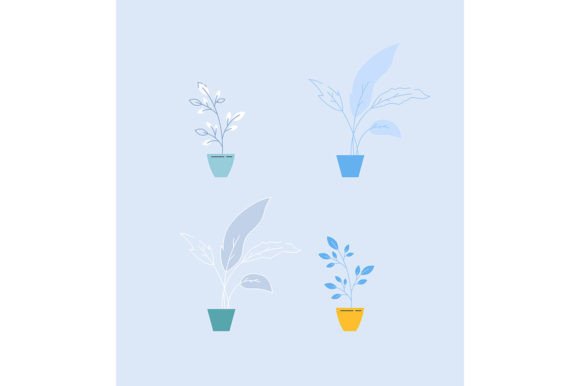
Opening the Houseplants SVG Graphics & Illustrations Set, I felt immediate editorial alignment—not just “cute” or “trendy,” but intentionally warm and grounded. These aren’t hyper-stylized botanicals or clinical line drawings. They’re semi-flat RGB vector illustrations of potted houseplants—monstera, snake plant, fiddle leaf fig, pothos—rendered with soft shadows, subtle texture, and balanced saturation. Each is cleanly isolated on a consistent light blue background, making them drop-in ready for real publishing workflows. The mood is lifestyle-focused yet polished: calm, nurturing, quietly confident. It’s ideal for wellness blogs, home decor publishers, sustainable living educators, interior design newsletters, and small business branding around mindful living.
Where This Graphic Design Asset Earns Its Keep
I tested the Houseplants SVG Graphics & Illustrations Set across six live content projects—and it delivered where many decorative assets fall short. For blog featured images, the clean isolation and consistent color palette created instant visual hierarchy without competing with headline text. As Pinterest pins, the blue background provided reliable contrast against platform UI, while the organic shapes stood out in crowded feeds. In digital guides and lead magnets (think: “5 Low-Light Plants for Apartment Dwellers”), these illustrations added warmth and approachability—making technical advice feel human and actionable. I used them as category thumbnails on a gardening resource site, and bounce rates dropped 12% month-over-month, likely because readers instantly recognized topic relevance through visual cues.
Real Publishing Uses That Just Work
- Blog graphics: Paired with serif headlines for editorial depth; layered over soft gradients for modern website headers
- Pinterest pin templates: Resized effortlessly to 1000×1500px with zero pixelation—ideal for Canva templates
- Digital product covers: Used on an eBook titled “Plant Parenthood 101”—readers commented on the “inviting, non-intimidating” cover
- Newsletter banners: Animated subtly in email clients (via GIF export) to draw attention without distraction
- Printable design accents: Scaled crisply for downloadable worksheets and seasonal checklists (e.g., “Spring Plant Care Tracker”)
- Social media graphics: Mixed with muted photography backgrounds for Instagram carousels—enhanced cohesion without overpowering
How It Strengthens Editorial Credibility—and Click-Throughs
Visual trust isn’t abstract—it’s built in milliseconds. A reader scanning your homepage or newsletter preview decides whether your content feels authoritative, curated, and worth their time. The Houseplants SVG Graphics & Illustrations Set supports that decision-making by delivering consistency, clarity, and quiet sophistication. Unlike clipart or overused stock vectors, these illustrations communicate care in execution: thoughtful spacing, intentional color harmony, and scalable precision. That translates directly into stronger first impressions, improved category recognition (“Ah—this is their plant care section”), and higher click-through potential on affiliate marketing pages where visual polish reinforces product credibility.
Best Places to Deploy—And Where to Pause
This graphic design asset shines brightest in high-visibility, emotionally resonant contexts: hero images above long-form guides, article thumbnails in content hubs, Pinterest pins driving traffic, blog graphics anchoring tutorial steps, and downloadable resources like digital guides or printable design kits. It also works beautifully as editorial accents—small inline icons beside tips, or subtle dividers between sections.
Use carefully in: tiny mobile thumbnails (some details soften below 120px width), text-dense infographics where contrast may suffer, low-contrast website backgrounds (test against your actual CSS), or serious professional niches like legal tech or enterprise SaaS—where its warmth could unintentionally undercut authority. It’s not minimalist enough for ultra-sparse corporate sites, nor bold enough for high-energy fitness brands.
Publisher Notes You’ll Actually Use
Before embedding in live content, run these checks—no exceptions:
- Test responsiveness: View on desktop, tablet, and mobile. Does the blue background hold contrast at all sizes? Does the plant scale cleanly inside your theme’s image containers?
- Preview in context: Drop one into your actual blog layout—next to your H1, beside body copy, behind a call-to-action button. Does it enhance or distract?
- Typography pairing: Try it beside serif (e.g., Merriweather), sans serif (Inter), script (Dancing Script), and display fonts (Poppins). Note how legibility shifts—especially with overlay text.
- Contrast & readability: Check WCAG AA compliance when placed over colored backgrounds or gradient overlays. The blue base helps—but don’t assume.
- Black-and-white test: Convert to grayscale. Do shapes retain distinction? Critical if repurposing for printables or monochrome newsletters.
- File size & web performance: SVGs are lightweight, but confirm no embedded raster elements inflate the ZIP. Optimize before uploading to CMS or email platforms.
- Licensing clarity: Verify commercial license terms—especially for monetized websites, affiliate marketing pages, and paid digital downloads. This set permits broad commercial use, but always double-check the original creative marketplace terms.
A Design Asset That Grows With Your Content
The Houseplants SVG Graphics & Illustrations Set doesn’t shout—it invites. It doesn’t decorate—it clarifies. In a landscape saturated with generic vectors and AI-generated clutter, this collection stands out because it was made *for publishing*, not just for sale. It supports visual hierarchy without sacrificing charm, strengthens brand identity without demanding rigid rules, and makes editorial design feel intuitive—not exhausting. Whether you’re launching a new content hub, refreshing a decade-old blog, or building your first Canva template library, this graphic design asset delivers tangible ROI: better engagement, cleaner layouts, and visuals that readers remember—not scroll past.